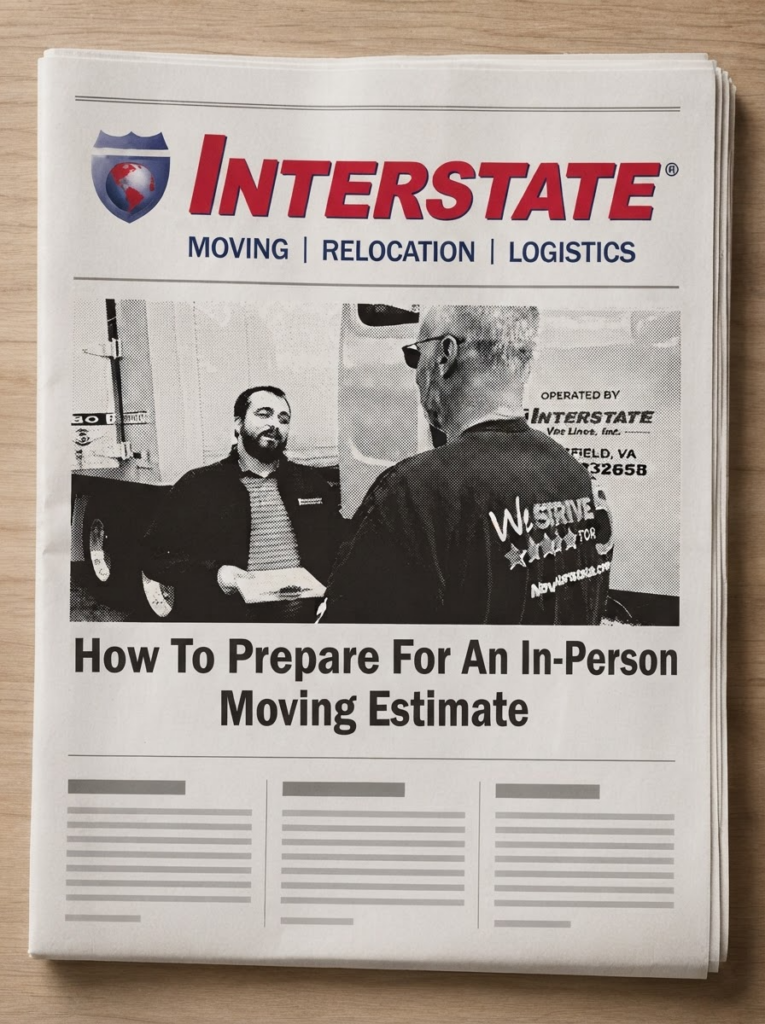
How to Prepare for an In-Person Moving Estimate
You booked your in-home estimate, now you might have some questions. How should you prepare? Will your house be too messy? Do you need to box things up beforehand? And here is the big one that keeps people up at night: could you do something wrong that leaves you underprepared and stuck with an inaccurate estimate?
These are all real worries, and I hear them from customers every week. The truth is, preparing for an estimate does not have to be stressful. When you know what the estimator is looking for, the process becomes simple, and you can feel confident that the numbers you receive are as accurate as possible.
I’m Hugo Mercedes, Sales Director at Interstate. I’ve spent years walking through homes across the DMV, helping families plan their moves and answering these same anxious questions. By the end of this article, you’ll know exactly what to do before your appointment, what to expect when I step through your door, and how to make sure you get an estimate that gives you peace of mind.
There are two main types: binding estimates, which lock in a price as long as nothing changes, and non-binding estimates, which are closer to a projection and may shift depending on the actual weight or time on move day. A binding estimate usually comes in a little higher than a non-binding one, since it includes a margin for error. But in return, you get price certainty, as long as the scope of the move does not change. A non-binding estimate, on the other hand, is more like “testing your luck.” If your shipment comes in heavier than expected, you pay the actuals. Local moves are billed by hours, long-distance by weight.
If you are planning a local move in the DMV, I would be glad to walk through your home and give you an estimate that is transparent, dependable, and tailored to your needs.
[Schedule your free in-person estimate today.]
These are all real worries, and I hear them from customers every week. The truth is, preparing for an estimate does not have to be stressful. When you know what the estimator is looking for, the process becomes simple, and you can feel confident that the numbers you receive are as accurate as possible.
I’m Hugo Mercedes, Sales Director at Interstate. I’ve spent years walking through homes across the DMV, helping families plan their moves and answering these same anxious questions. By the end of this article, you’ll know exactly what to do before your appointment, what to expect when I step through your door, and how to make sure you get an estimate that gives you peace of mind.
Confirm Contact Information First
The very first step is simple but important. Make sure you have the sales representative’s name, phone number, and email saved. That way, if the estimator is running late, stuck in traffic, or if you need to cancel or reschedule, you know exactly who to call. Customers often forget this small detail, but it can make the difference between a smooth adjustment and unnecessary stress. Having the right contact info ensures you stay connected and avoids confusion on the day of your appointment.Get Your Questions Ready
Many people feel hesitant about asking questions during the estimate, but that is exactly the time to do it. Wondering about how long your move might take, or whether you need packing services? Write down your questions beforehand so nothing slips your mind during the visit. I have found that customers who come prepared with their own list often leave the estimate feeling far more confident about their plan.Walk Through Your Home as if You Were Moving Today
Before the estimator arrives, take a quick tour of your own home. Open closets, check the basement, and look in the attic or garage. If there are items you know you will not be moving, set them aside or place a sticky note on them. This helps us focus on what really matters. When I walk through with a customer, the estimate is always more accurate if they have already taken stock of their belongings.Understand the Paperwork You Will See
An estimate is not just a number at the bottom of the page. It is a detailed breakdown of services, dates, and terms. Look carefully at each line item, including your scheduled move date, delivery date, storage details, packing services, and expiration dates. Customers often skip to the final price, but every detail matters because it can affect cost and timing.There are two main types: binding estimates, which lock in a price as long as nothing changes, and non-binding estimates, which are closer to a projection and may shift depending on the actual weight or time on move day. A binding estimate usually comes in a little higher than a non-binding one, since it includes a margin for error. But in return, you get price certainty, as long as the scope of the move does not change. A non-binding estimate, on the other hand, is more like “testing your luck.” If your shipment comes in heavier than expected, you pay the actuals. Local moves are billed by hours, long-distance by weight.
Know That You Can Update Later
Another common worry is, “What if my plans change after the estimate?” The good news is that you can update your estimate at any time before you book your move. If your dates shift or you decide to add or remove services, just reach out to your sales representative. It is always best to update your dates as early as possible (whether it is your move date, delivery window, or packing day) so the team can secure the resources you need. You are never locked in after just one walkthrough.Recognize That This is a Partnership
Some customers like to look me up on LinkedIn before I arrive. They see my years of experience and feel reassured that they are working with someone who knows the process inside and out. I always welcome that, because moving works best when there is trust on both sides. You do not need to prepare anything fancy, but knowing a bit about who will be walking through your home can help you feel more confident and ready to ask questions. For my part, I come prepared to guide you through the details, explain your options, and make sure your estimate reflects exactly what your move requires. When both of us bring that level of openness, the estimate becomes more than just numbers on a page. It becomes a plan you can rely on.My Best Tips as a Sales Director
After years of walking through homes, here is my short list of advice:- • Confirm your sales representative’s contact details right away.
- • Do a walkthrough of your home and note what will and will not be moved.
- • Prepare questions ahead of time.
- • Pay attention to whether your estimate is binding or non-binding.
- • Review line items, not just the bottom line.
- • Make changes as soon as your plans shift.
Conclusion
Preparing for an in-home estimate does not need to be stressful. With a few simple steps, you can walk into the appointment ready, confident, and in control of the process. I have seen firsthand how customers who prepare save time, avoid confusion, and get clearer estimates. The customers I see who follow these steps save themselves confusion later and usually end up with a clearer, more reliable quote.If you are planning a local move in the DMV, I would be glad to walk through your home and give you an estimate that is transparent, dependable, and tailored to your needs.
[Schedule your free in-person estimate today.]