Which Commercial Warehousing Services Do You Actually Need? How to Choose the Right Mix for Your Project
If you are trying to figure out which commercial warehousing services your company actually needs, it can feel like every provider is speaking a different language. You hear terms like asset management, climate control, FF&E handling, staging, and distribution, but no one really explains what you should choose or what will actually support your project. Most companies come to me saying they need “storage” when what they really need is a system that helps them track, access, and deploy their items without confusion.
I’m Brandon Newton, Director of Logistics here at Interstate, and I have been in this field since 1991. I started on the trucks, worked as a driver, moved into warehouse management and dispatch, supported large commercial projects, and eventually stepped into logistics leadership. Because I have worked in every corner of this environment, I tend to approach warehousing from a practical point of view.
In this article, I am going to walk you through the questions I ask customers every single week. I will explain the differences between the commercial warehousing services you are most likely to be quoted, including storage, asset management, staging, distribution, and climate controlled support, and I will show you how to match those services to what your project actually requires.
Why Most Companies Think They Only Need Storage
When a company first comes to me, the conversation usually starts with something simple. They will say they need storage for a project or for excess inventory. It makes sense. Storage is the word everyone knows.
Once I ask a few questions, it becomes clear that the need is deeper. Most companies actually need control and visibility on top of a place to park items. They want to know how often they can access inventory. They want to know who can touch it. They want to know what condition it will be in. And they want reassurance that nothing will be lost, mixed up, or damaged.
True warehousing lives at the intersection of storage and workflow. That becomes obvious once we break down the services one by one.
Warehouse Storage: What It Covers and When It Is Enough
For some companies, simple storage works fine. You have items that need to sit still for weeks or months without much movement. You are not relying on detailed reporting or a distribution plan. You just need a clean, secure place to put things until you are ready to pick them up again.
This is common for:
- Companies in between office spaces
- Contractors waiting on delayed construction timelines
- Businesses storing surplus equipment that rarely moves
The benefit of straightforward storage is cost. You are paying for space and not for constant activity. You still get inventory visibility and portal access, because that comes with storing here. There is simply less for the system to report when product is not moving.
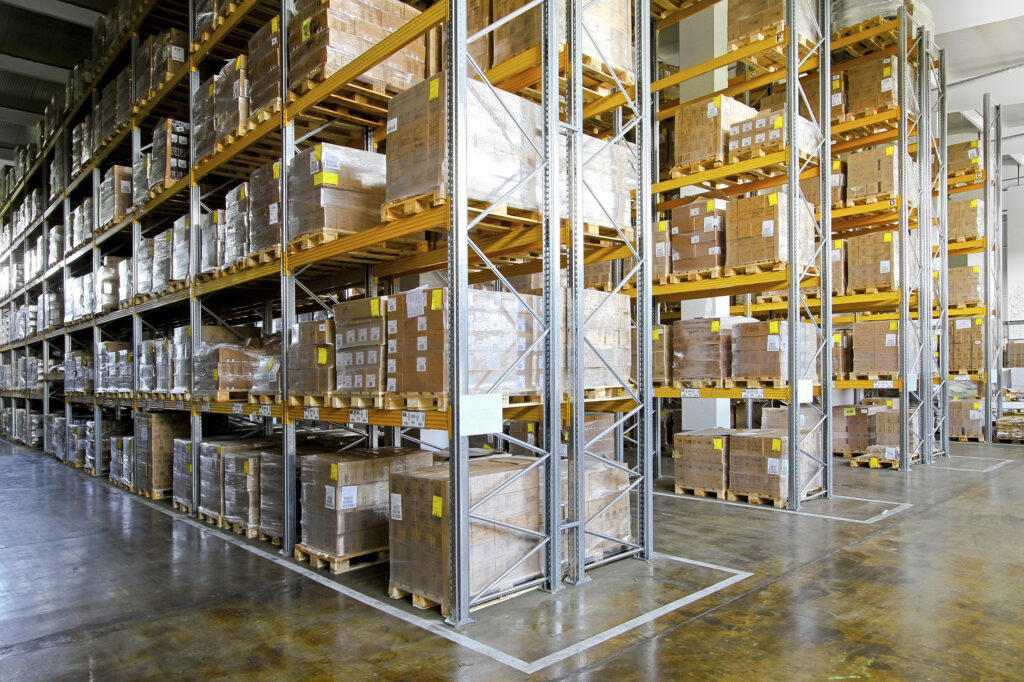
Read more about commercial warehouse storage options and how racking, containers, floor space, and staging compare.
How Asset Management Works Alongside Storage
When a company needs to access, track, or deploy items regularly, the asset management system does the heavy lifting. Every commercial client who stores with us has access to it, and our asset management team runs it live, 24 hours a day.
Asset management is a structured system that tracks every item as it enters and leaves the warehouse. In our case, that includes:
- Item-level records, or a simple piece count if that is all you need
- Detailed receiving reports
- Photos of items
- Storage location within the warehouse
- Real time visibility through a customer portal
- Activity history showing what moved and when
- The ability to call product forward when you need it
What does carry an additional cost is having our team manage the inventory function on your behalf, plus the labor to receive or ship product each time it moves. If your product turns constantly, budget for that access labor separately from your square footage.
This level of visibility matters most for industries where accuracy is non-negotiable. Think about IT equipment, data centers, medical devices, or hospitality rollouts. These projects deal with sensitive, high-value, or regulated items that must be tracked carefully. Asset management creates a digital record of every item so nothing gets misplaced, duplicated, or delayed. It keeps teams aligned, prevents costly errors, and gives you the confidence that every asset is exactly where it should be.
If your project involves staging items, deploying them in phases, or coordinating with multiple vendors, asset management becomes the backbone of your workflow. For a closer look at what is included and what costs extra, see our guide to warehouse asset management services.
Staging and Distribution: When Warehousing Becomes Operational Support
Some companies go a step further. They need items to move in and out of storage constantly as part of an active project. That is where staging and distribution come in.
Staging is the process of organizing your items in the warehouse so they can be deployed in the right order at the right time. Distribution is the movement that follows, whether it is one truckload or deliveries split across multiple phases.
A good example of this comes from a custom cabinet company we work with that does mainly commercial construction. They outfit entire new buildings, so their product arrives at our warehouse and sits for roughly three months while the site gets ready. On one project that meant a 17-story high rise with more than 250 rooms. Staging let the team organize product by floor and room so it could be delivered and installed in phases, keep it visible, and check it quickly during installation. It gave the customer more control and made the entire staging and delivery process more efficient.
Storage method plays into staging as well, and medical projects are a good contrast. Larger equipment often is not suited to a rack and needs floor space, while smaller items can be bulked together and racked. Both go into the same tracking system, so the customer sees all of it regardless of how it is stored.
That kind of workflow would be nearly impossible in a simple storage environment. Staging created efficiency. Distribution kept the project moving without delays.
Climate Controlled Warehousing: When Temperature Really Matters
Climate control can sound like a luxury, but in commercial warehousing it has a clear purpose. It maintains a steady temperature and protects sensitive items from humidity changes. This matters for:
- IT and data center equipment
- Medical equipment
- Historical and archival items
- Sensitive materials like paper and artwork
This means a controlled environment designed to prevent damage from heat, moisture, or extreme temperatures. It is not refrigeration. Some projects require climate controlled transportation in addition to climate controlled storage.
Climate control is also something you specify up front rather than something that comes standard, so raise it early. If your items can be damaged by heat or humidity, it does real risk prevention work and belongs in your scope from the start.
Short Term, Long Term, and Hybrid Warehousing
Storage length is more than a timeline. It determines how the warehouse organizes your inventory.
- Short term works for fast turnover projects where items are coming in and out
- Long term is useful for items that sit for months at a time
- Hybrid blends both and is the most flexible
Hybrid is becoming the most common because it mirrors real projects. Some items stay still while others move constantly. The warehouse needs to manage both without losing track of anything.
This is where asset management and storage work together. The system tells you how long items have been stored, what moved last, and whether something is worth keeping or replacing. In my experience, that visibility is what helps companies decide what is worth storing and what is not.
We do not wait to be asked. When the reports show product has been sitting for six months to a year, I bring it up. I could keep billing for that square footage and say nothing. I would rather suggest we revisit it every two to four months and decide together whether it is still worth paying to keep. Storage is driven by volume, so the less you hold, the less you spend.
How to Match Services to Your Project
Here is a simple way to break it down.
If your inventory rarely moves
You need: Storage, with asset management visibility included
If your inventory moves often or comes in phases
You need: Staging and distribution support, with access labor in the budget
If your items are sensitive or regulated
You need: Climate controlled storage
If your project is large or complex
You need: Hybrid short and long term storage plus distribution support
If you would rather not manage the inventory yourself
You need: Managed oversight from our asset management team
Warehousing is a combination of services that support your operational flow. When the mix is right, everything about the project becomes easier.
Final Thoughts: Choosing the Right Warehousing Mix
At the end of the day, choosing commercial warehousing services comes down to identifying what your project truly needs to stay organized, on schedule, and protected. Many companies assume they only need storage, but once we break down their workflow, it becomes clear that visibility, access, and tracking matter just as much as space. The good news is that the right combination of services gives you exactly that.
My goal is always to guide companies toward the simplest and most effective setup so they never overbuy or underbuy again. If you are planning a project or trying to make sense of your warehousing needs, I am happy to talk through it with you. A clear plan always saves stress, time, and cost in the long run.