The International Moving Timeline: From Packing Day to Delivery
Are you worried your shipment will sit at a port with no updates? Do you wonder why a friend’s move to Europe took three weeks by sea while someone else’s took longer? Are you anxious that a random customs inspection could derail your plans? These are real concerns I hear every day.
I am Lucia Shropshire, Manager of Global Relocation at Interstate. I have spent almost sixteen years on the international side of moving, from operations and pricing to freight forwarding and now management. My team and I plan these timelines daily, and we stay with your shipment from survey to delivery. In this guide I will show you typical timeframes for air and sea, what each step looks like from packing day onward, what can speed things up, and what can slow things down so you can plan with confidence.
Air Shipment Transit Times by Region
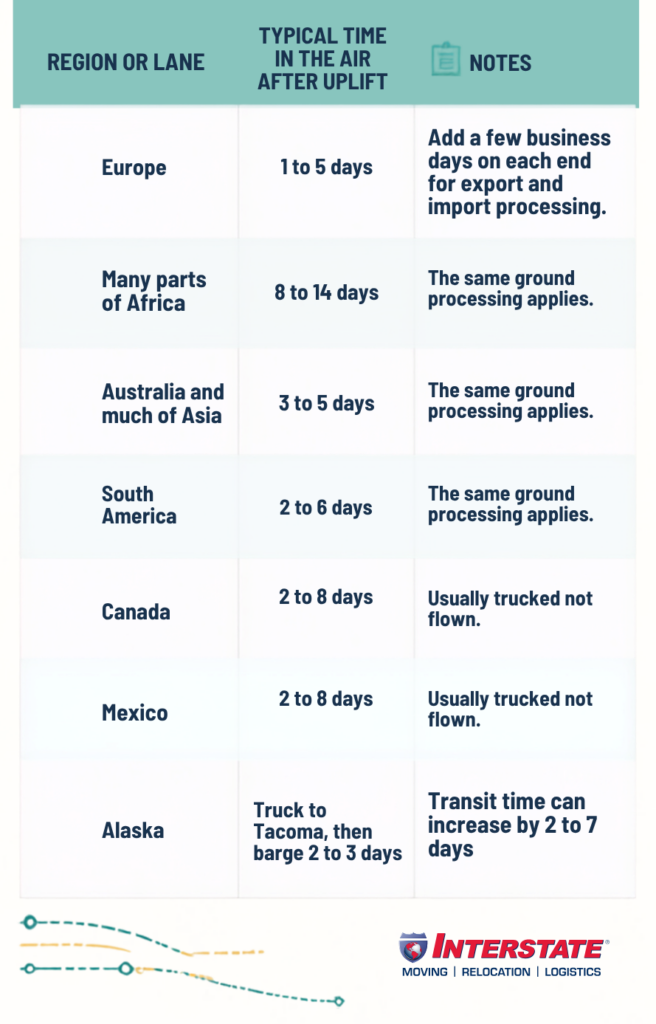
Air still needs export and import processing on the ground, so build a few business days on each end for handoffs and customs.
Sea Shipment Transit Times by Region
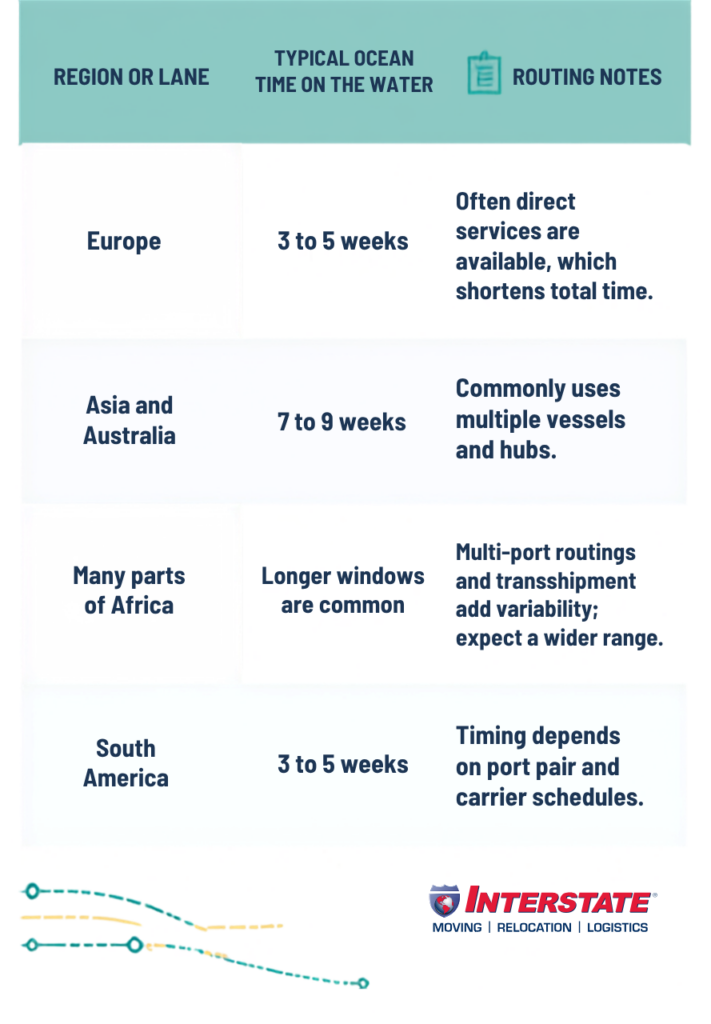
These timeframes don’t count the steps before and after shipping — such as packing at origin, waiting time at the terminal, customs clearance, or the final local delivery to your home.
Planning note: I start with broad time ranges, then refine them once your carrier, ports, and shipping cutoffs are confirmed.
The International Moving Timeline Step by Step
- Paperwork and survey
We collect the required documentation and details for your move. I also introduce you to our destination partner right away so you know who will handle customs and delivery on the other end. Getting documents back quickly is the easiest way to keep the clock moving. - Pack and load
We pack, inventory, and load to truck or lift vans. If anything unusual is in the home, this is the last clean handoff point to flag it before customs reviews your paperwork. - Line haul to the origin terminal
Your shipment moves to the port or airport and checks into the carrier’s system. - Terminal handoff and export processing
Security screening, export filing, and carrier cut-offs happen here. For air this is the queue before uplift. For sea this is the stack, load, and sail sequence. - Main transit
Use the air and ocean windows above for the transport leg. - Arrival handling and import customs
The terminal receives the freight, our destination partner files your import documents, and customs either clears your shipment or selects it for inspection. Exams add time and are random by design. - Final mile scheduling and delivery
We confirm your delivery window, arrange access needs, and deliver. Some destinations add a feeder vessel or long inland haul, which adds another planning cycle.
What you can do to protect your timeline
- Share any unusual or high value items during the survey. Early disclosure lets me start permits or special handling so customs does not hold your shipment later.
- Keep prohibited items, aerosols, and lithium batteries out of the shipment. Removing risky items prevents safety flags that can trigger inspections and delay release.
- Put passports, visas, jewelry, daily medications, and other must haves in your luggage. This keeps your life moving if the shipment takes longer than planned.
- Send requested documents right away. Clearance cannot start until paperwork is complete, so fast responses keep the clock moving.
- Choose a small air shipment for true essentials when speed matters. A focused air move can bridge the gap while the rest travels by sea.
What I will monitor that can affect timing
- Carrier route changes and vessel schedules that can add days or weeks. I track these and adjust plans when options exist.
- Random customs examinations. If your shipment is selected, I will prepare you for likely timeframes and next steps.
- Port congestion and labor actions that create queues at berth or at the terminal. I will update you if your container is waiting and explain the impact on delivery dates.
- Holiday slowdowns at foreign agencies. Different countries pause at different times, so I build these calendars into your plan and set realistic windows.
In my role as Manager of Global Relocation, my team and I watch these timing factors every day. If something shifts, you will hear from me quickly with clear dates and options, such as adjusting the delivery window, splitting a shipment, or arranging short term storage so your plans stay on track.
Why sea timelines vary so much
Two ocean shipments on the same route can move at very different speeds. A direct sailing from the East Coast to Europe is much quicker than one that stops at several U.S. ports and then transfers through a European hub. Terminal traffic plays a role as well, busy ports can mean extra waiting before your container is loaded or after it arrives. Finally, paperwork matters. If import documents are ready when the shipment lands, clearance starts right away. If they’re not, everything sits until the forms are complete.
The Most Common Delays and How We Minimize Them
Customs exams and sensitive contents
Exams are random, but good paperwork shortens reviews. Items like taxidermy, biological specimens, and certain furs trigger permit checks in many countries. I have handled a shipment to Australia that included a skull collection and fur items. Australia’s biosecurity rules are some of the strictest in the world, so we had to document how the items were obtained and secure approvals like CITES and USDA before customs would release the shipment. When I know about items like this during the survey, I can start permits early and keep the timeline under control.
Lithium batteries, aerosols, and liquids
Lithium-ion batteries are a hot-button issue worldwide because of fire risk. Including them can lead to safety holds and serious delays. Aerosols and flammables create similar problems. Liquids can rupture under temperature or pressure changes, causing damage that requires rework and inspection. If you must send a small amount of liquid contents like shampoos, I recommend heavy-duty, fully sealing bins so leaks are contained. We still inspect, but proper containment keeps a minor spill from becoming a terminal issue.
Political reroutes and port conditions
Weather is usually manageable, but political events and port actions are not. Strikes and regional conflicts can force carriers to reroute ships to alternate ports. When that happens, vessels queue and dwell times rise. If a lane is trending slow, I will tell you, adjust your window, and discuss options such as splitting out a small air lot for essentials.
Rare operational incidents
Very rarely, a port mishandling incident can hold a container while authorities complete an investigation. It is uncommon, but when it does occur the only practical approach is to stay close to the terminal and keep you informed until release.
Air for speed, sea for scale
Air is best for a small essentials set when you are moving into a furnished home or want key items quickly. Carton size limits keep the focus on clothes, laptops, and kids’ basics. Sea is the practical choice for one- to two-bedroom apartments and larger homes. It is the only sensible way to move furniture and full households across oceans. Many families do both. A small air shipment keeps life moving while the rest sails.
Quick ways to keep your timeline steady
- Share photos of anything unusual or high value before your survey
- Separate items you will not ship so we do not count them
- Keep batteries, aerosols, and flammables out of the shipment
- Put must-have items in your luggage
- Return requested documents promptly
- Ask me for the latest timing window on your specific lane
Bottom Line: Setting a Realistic International Moving Timeline
International timelines are a mix of what we plan and what the world throws at us. My job is to set a realistic window, remove avoidable delays, and keep you informed when something outside your control changes the clock. If you want me to translate your situation into a clear international moving timeline, I am happy to walk your inventory and map your route from packing day to delivery.